Ingredients
For the Chicken
-
150 grams boneless, skinless chicken breast
-
1 teaspoon paprika
-
½ teaspoon garlic powder
-
½ teaspoon black pepper
-
½ teaspoon cumin powder
-
¼ teaspoon chili powder, optional
-
½ teaspoon salt
-
1 teaspoon lemon juice
-
½ teaspoon olive oil
-
1 teaspoon water
For the Yogurt Sauce
-
3 tablespoons low-fat Greek yogurt or plain low-fat yogurt
-
1 teaspoon lemon juice
-
¼ teaspoon garlic powder or ½ small garlic clove, finely minced
-
A pinch of black pepper
-
A small pinch of salt
-
Fresh coriander or parsley, finely chopped
For the Wrap
-
1 medium whole-wheat tortilla or roti
-
½ cup shredded lettuce
-
¼ cup sliced cucumber
-
¼ cup diced tomato
-
2 tablespoons thinly sliced onion
-
A few slices of bell pepper
-
Fresh coriander, optional
-
A small amount of chili sauce or hot sauce, optional
Preparation Time
The preparation time is approximately 15 minutes, while cooking takes around 10–15 minutes. The entire meal can therefore be ready in about 30 minutes.
Step 1: Prepare the Chicken
Begin by trimming any visible fat from the chicken breast. Place the chicken on a clean cutting board and cut it into thin strips or small bite-sized pieces. Cutting the chicken into smaller pieces helps it cook quickly and allows the seasoning to cover more of the surface.
Place the chicken in a bowl. Add paprika, garlic powder, black pepper, cumin, chili powder if desired, salt, lemon juice, olive oil, and water. Mix everything thoroughly until the chicken is evenly coated.
Allow the chicken to marinate for at least 10 minutes. If you have more time, you can leave it in the refrigerator for 30 minutes to several hours. The lemon juice and spices will help add flavor without requiring a heavy sauce.
Step 2: Cook the Chicken
Heat a non-stick frying pan over medium heat. Because the chicken already contains a small amount of olive oil, you generally do not need to add much additional oil.
Place the seasoned chicken in the hot pan in a single layer. Cook for approximately 4–5 minutes on one side, then turn the pieces and cook for another 4–5 minutes, depending on their size.
The chicken should be completely cooked in the center. For food safety, chicken should reach an internal temperature of 74°C (165°F). Once cooked, remove the chicken from the pan and allow it to rest for a few minutes.
You can also grill the chicken instead of pan-frying it. Grilling gives the chicken a slightly smoky flavor and works particularly well for meal preparation.
Step 3: Make the Yogurt Sauce
While the chicken is cooking, prepare the sauce.
Add the Greek yogurt to a small bowl. Mix in lemon juice, garlic, black pepper, salt, and chopped coriander or parsley. Stir until smooth.
Taste the sauce and adjust the seasoning. If you like a spicy wrap, add a small amount of chili powder or hot sauce. If the sauce is too thick, add a teaspoon of water and mix again.
Using yogurt instead of mayonnaise or a creamy commercial dressing significantly reduces the amount of fat and calories while still providing a creamy texture.
Step 4: Prepare the Vegetables
Wash all the vegetables thoroughly. Shred the lettuce, slice the cucumber, dice the tomato, and thinly slice the onion and bell pepper.
You can use almost any low-calorie vegetables you enjoy. Carrots, cabbage, spinach, radishes, and fresh coriander are also excellent choices.
Vegetables are important in this recipe because they add volume, crunch, color, vitamins, minerals, and fiber without adding many calories.
Step 5: Warm the Tortilla
Heat a dry non-stick pan over low to medium heat. Place the whole-wheat tortilla in the pan for approximately 20–30 seconds on each side.
Do not add butter or oil. You only need to warm the tortilla enough to make it flexible.
If you are using a homemade roti, you can warm it in the same way. A whole-wheat tortilla or roti can provide carbohydrates and fiber while serving as the base of the wrap.
Step 6: Assemble the Wrap
Place the warm tortilla on a flat surface.
Spread approximately two tablespoons of the yogurt sauce across the center of the tortilla. Do not spread too close to the edges because the filling may fall out when you roll it.
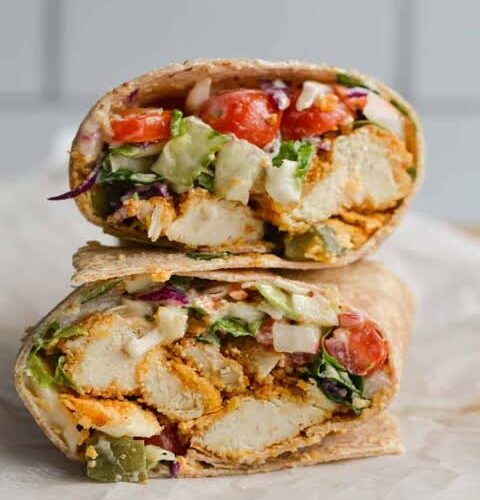
Add the shredded lettuce, cucumber, tomato, onion, and bell pepper. Place the cooked chicken on top of the vegetables.
Add a little fresh coriander and, if desired, a small amount of hot sauce.
Avoid adding large amounts of mayonnaise, cheese, creamy dressing, or oil if your goal is to keep the wrap low in calories. These ingredients can increase the calorie content quickly.
Step 7: Roll the Wrap
Fold the bottom part of the tortilla upward over the filling. Then fold both sides toward the center.
Finally, roll the tortilla forward tightly while keeping the filling inside. If you want a toasted wrap, place it seam-side down in a dry pan for approximately one minute on each side.
The outside should become lightly crisp while the inside remains warm and juicy.
Approximate Nutrition
The exact nutrition depends on the tortilla, amount of chicken, yogurt, and other ingredients you use. A typical wrap made with the quantities above may contain approximately:
-
Calories: 350–450
-
Protein: 40–45 grams
-
Carbohydrates: 35–45 grams
-
Fat: 8–12 grams
-
Fiber: 5–8 grams
These numbers are estimates rather than exact values. Different brands and portion sizes can change the nutritional content significantly.
How to Make It Even Lower in Calories
There are several simple ways to reduce the calorie content.
First, choose a smaller or low-calorie tortilla. Second, use skinless chicken breast rather than chicken thighs because breast meat is generally leaner. Third, keep added oil to a minimum.
The sauce is another area where calories can increase quickly. A yogurt-based sauce is usually a lighter option than mayonnaise-based sauces. You can also increase the amount of lettuce, cucumber, cabbage, and tomato to make the wrap larger and more filling without adding many calories.
If you want a very light version, use a large lettuce leaf instead of a tortilla. Alternatively, serve the chicken and vegetables as a salad bowl.
Flavor Variations
This recipe can easily be changed to create different flavors.
For a Mexican-style wrap, add cumin, chili powder, lime juice, coriander, and a little salsa.
For a Mediterranean-style wrap, use oregano, lemon, garlic, cucumber, tomato, parsley, and yogurt sauce.
For a spicy version, add chili flakes, cayenne pepper, or hot sauce to the chicken and yogurt sauce.
You can also add a small amount of low-fat cheese if you have enough calories available in your meal plan.
Meal-Prep Instructions
This chicken wrap is excellent for meal preparation. Cook several portions of chicken at once and store them in airtight containers in the refrigerator.
Keep the vegetables and yogurt sauce separate until you are ready to eat. This prevents the tortilla from becoming soggy.
When you want to prepare a wrap, warm the chicken, warm the tortilla, add the vegetables and sauce, and assemble everything fresh.
For best quality, cooked chicken should be refrigerated promptly and consumed within a few days. Always follow appropriate food-safety practices and refrigerate perishable foods promptly.
Final Tips
The key to making a delicious low-calorie chicken wrap is maximizing flavor without relying on high-calorie ingredients. Spices, lemon juice, garlic, fresh herbs, and yogurt can make a simple meal taste much more interesting.
Do not overcook the chicken, because dry chicken can make the wrap unpleasant. Cutting the chicken into evenly sized pieces also helps it cook consistently.
Finally, remember that “low calorie” depends on portion size and ingredients. A wrap can become much higher in calories if you add large amounts of oil, cheese, mayonnaise, or creamy dressing. Keeping those ingredients controlled allows you to enjoy a generous, flavorful meal while maintaining a relatively moderate calorie intake.
This low-calorie chicken wrap is therefore a practical combination of lean protein, fresh vegetables, whole grains, and a light homemade sauce. It is quick enough for a weekday meal, filling enough for lunch or dinner, and flexible enough to adapt to different tastes and dietary goals.