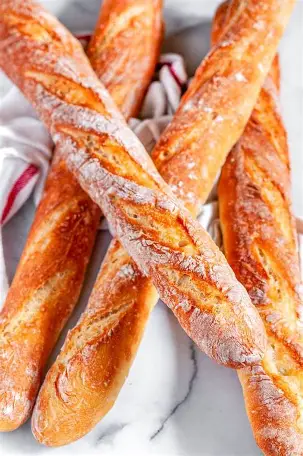
There is something special about a freshly baked French baguette. The crust is beautifully crisp, the inside is light and airy, and the smell of freshly baked bread makes the whole kitchen feel warm and inviting. The good news is that you don’t need a professional bakery or complicated equipment to make delicious homemade French baguettes at home.
This recipe uses simple ingredients and a little patience. The key is giving the dough enough time to develop flavor and allowing the baguettes to rise properly before baking. A hot oven and a little steam during the beginning of baking help create that classic golden, crispy crust.
Ingredients
- 3 1/2 cups (440g) bread flour
- 1 1/2 cups (360ml) lukewarm water
- 1 1/2 teaspoons salt
- 1 teaspoon instant yeast
- 1 teaspoon sugar
- Extra flour, for shaping
Instructions
1. Prepare the Dough
In a large mixing bowl, combine the lukewarm water, instant yeast, and sugar. Let the mixture sit for about 5 minutes.
Add the bread flour and salt. Mix with a wooden spoon or your hands until a rough, sticky dough forms. Don’t worry if the dough looks wetter and stickier than regular bread dough. This higher hydration helps create the light, open texture associated with baguettes.
Cover the bowl with a clean kitchen towel or plastic wrap and let the dough rest for about 20 minutes.
2. Develop the Dough
After the first rest, gently stretch and fold the dough. Take one side of the dough, stretch it upward, and fold it over toward the center. Turn the bowl and repeat on all four sides.
Cover and let the dough rest for another 20 minutes.
Repeat the stretch-and-fold process two more times, allowing about 20 minutes of resting time between each round.
You should notice that the dough gradually becomes smoother and stronger.
3. First Rise
Cover the bowl and allow the dough to rise at room temperature for approximately 1 1/2 to 2 hours, or until it has noticeably increased in size.
For better flavor, you can also place the covered dough in the refrigerator and let it ferment overnight. Slow fermentation gives the baguettes a deeper flavor and can make the finished bread even more delicious.
If you refrigerate the dough overnight, allow it to sit at room temperature for about 30–45 minutes before shaping.
4. Divide the Dough
Lightly flour your work surface. Carefully turn the dough out onto the surface, trying not to deflate it too much.
Divide the dough into three approximately equal pieces.
Gently shape each piece into a loose rectangle. Avoid pressing the dough flat because you want to preserve as much of the air inside as possible.
Cover the pieces with a clean towel and let them rest for about 15–20 minutes.
5. Shape the Baguettes
Take one piece of dough and gently stretch it into a rectangle.
Fold the top third toward the center and gently press the seam. Fold the bottom third upward and press again.
Then fold the dough in half lengthwise and pinch the seam closed.
Using both hands, gently roll the dough back and forth, gradually extending it until it is approximately 14–16 inches long.
Repeat with the remaining pieces of dough.
Place the shaped baguettes seam-side down on a lightly floured baguette pan, parchment-lined baking sheet, or a clean kitchen towel that has been lightly dusted with flour.
Leave enough space between each baguette so they don’t stick together while rising.
6. Second Rise
Cover the shaped baguettes loosely with a clean kitchen towel.
Allow them to rest for approximately 30–45 minutes.
They don’t necessarily need to double in size. You are looking for the dough to become slightly puffy and relaxed.
While the baguettes are rising, preheat your oven to 475°F (245°C).
Place a heavy baking tray or oven-safe pan on the bottom rack of the oven. This will be used to create steam.
7. Score the Baguettes
Just before baking, carefully transfer the baguettes to a parchment-lined baking sheet if necessary.
Using a very sharp knife or bread lame, make 3–4 shallow diagonal cuts along the top of each baguette.
Make the cuts quickly and confidently. The scoring allows the bread to expand in a controlled way while baking and gives the baguettes their traditional appearance.
8. Create Steam
Place the baguettes in the hot oven.
Immediately pour about 1 cup of hot water into the preheated empty tray on the bottom rack. Be extremely careful because the steam will be very hot.
Close the oven door quickly.
The steam helps keep the outer surface of the dough flexible during the first part of baking, allowing the baguettes to expand before the crust becomes firm.
9. Bake
Bake the baguettes at 475°F (245°C) for about 10 minutes with steam.
Carefully remove the steam tray if possible, then reduce the oven temperature to 450°F (230°C).
Continue baking for another 10–15 minutes, or until the baguettes are deeply golden brown and sound hollow when tapped underneath.
Every oven is different, so keep an eye on the bread during the final few minutes.
10. Cool Before Slicing
Remove the baguettes from the oven and place them on a wire rack.
Allow them to cool for at least 20–30 minutes before slicing.
It can be tempting to cut into a hot baguette immediately, but allowing the bread to cool helps the interior finish setting properly.
Once cooled, slice and enjoy.
Tips for Perfect Homemade Baguettes
Use bread flour: Bread flour generally gives the dough more strength and helps create a chewy interior.
Don’t add too much flour: The dough should be soft and slightly sticky. Adding excessive flour can make the baguettes dense.
Be gentle with the dough: Try not to press out all the air during shaping. Those bubbles help create the characteristic airy crumb.
Don’t rush fermentation: Good baguettes depend on fermentation. Giving the dough enough time improves both flavor and texture.
Use steam: Steam during the beginning of baking is one of the secrets to getting a thin, crisp crust.
Score just before baking: Make the cuts immediately before the baguettes go into the oven for the best expansion.
Let them cool: The crust will become crisp as the baguettes cool, while the inside finishes setting.
How to Store Homemade Baguettes
Fresh baguettes are best enjoyed the same day they are baked. If you have leftovers, keep them loosely wrapped in a clean kitchen towel or paper bag at room temperature for up to a day.
Avoid storing baguettes in the refrigerator because refrigeration can make bread become stale more quickly.
For longer storage, slice the baguette and freeze it in an airtight freezer bag. When you’re ready to enjoy it, reheat the pieces in a hot oven until warmed and crisp.
Serving Ideas
Homemade French baguettes are incredibly versatile. Serve slices alongside soups, salads, pasta, or roasted vegetables. They are also wonderful for sandwiches, garlic bread, bruschetta, or simply spread with butter.
For a simple breakfast or snack, warm a slice and serve it with butter and your favorite jam. For dinner, use the baguette to soak up sauces and soups.
There is also something satisfying about tearing off a piece of freshly baked baguette and enjoying it while it is still slightly warm.
Final Thoughts
Making homemade French baguettes takes a little patience, but the result is worth it. With a handful of basic ingredients, proper fermentation, gentle shaping, and a hot oven, you can create baguettes with a beautifully crisp golden crust and a soft, chewy interior.
Once you make them successfully, you may find yourself wanting to bake them again and experiment with longer fermentation times, different flours, or slightly different shapes.
Nothing beats the smell of homemade bread coming out of the oven—and these French baguettes are a wonderful recipe to keep in your homemade bread collection.