
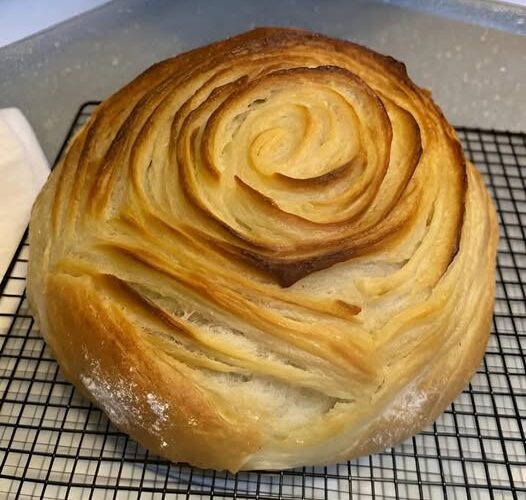
Buttery Croissant-Style Sourdough Loaf (No Lamination Needed)
Buttery Croissant-Style Sourdough Loaf: Let’s clear this up real quick—this isn’t a classic croissant. There’s no traditional lamination, no butter blocks getting folded a hundred times. But once this loaf hits the oven? It comes out with that same golden, crackly, flaky vibe that instantly reminds you of a croissant.
This buttery sourdough loaf is a clever shortcut to croissant-like flavor and texture—without the need for lamination. By folding grated frozen butter into the dough during fermentation, you create delicate pockets of richness that bake into a soft, slightly layered crumb. The result is a loaf that’s crisp on the outside, tender and airy inside, with a deep buttery aroma and mild sourdough tang. It’s rustic, indulgent, and surprisingly achievable at home.
Time
| Stage | Time |
|---|---|
| Mixing dough | 10–15 minutes |
| Stretch & folds | 2–3 hours |
| Bulk fermentation | 3–5 hours (until ~75% rise) |
| Shaping | 15–20 minutes |
| Cold proof | 8–12 hours (overnight) |
| Baking | 50–55 minutes |
| Cooling | 1 hour |
| Total time | ~14–20 hours |
Ingredients
- 340g water
- 120g active sourdough starter
- 500g bread flour
- 12g salt
- 1 stick butter (frozen, then grated)
Method
1. Mix the Dough
Combine water, sourdough starter, and flour.
Mix until you get a shaggy dough.
Add salt and mix until incorporated.
2. Stretch & Folds (4 Sets Total)
Perform 4 stretch-and-folds, spaced about 30–45 minutes apart:
- 1st fold: Regular stretch and fold (no butter)
- 2nd fold: Add half of the grated butter
- 3rd fold: Add the remaining butter
- 4th fold: Regular stretch and fold
👉 Keep the dough cool so the butter stays solid and doesn’t melt.
3. Bulk Fermentation
Let the dough rise until about 75% increased in size (not fully doubled).
4. Shape
Shape the dough into a loaf and place it into a banneton or proofing basket.
5. Cold Proof
Refrigerate overnight for better flavor and texture.
6. Bake
- Preheat oven to 450°F (230°C)
- Place dough in a loaf pan
- Cover with another pan (to trap steam)
Baking steps:
- Bake at 450°F for 30 minutes (covered)
- Then 425°F for 20–25 minutes (uncovered)
7. Cool
Let the loaf cool completely before slicing… if you can resist 😅
Notes
- Butter may melt and drip during baking—this is normal
- Your kitchen will smell amazing
- It’s easier to make separate batches rather than dividing this dough
Result
- Buttery, soft interior
- Slightly flaky, layered texture
- Rich flavor with sourdough tang
FAQs
Why use frozen grated butter?
Grated frozen butter distributes evenly and creates small pockets of fat, mimicking a laminated effect without complicated folding.
What if my butter melts during folding?
That’s okay, but try to keep the dough cool. If needed, refrigerate the dough briefly between folds.
Can I skip cold proofing?
Yes, but overnight proofing improves flavor, texture, and structure significantly.
Why bake covered first?
Covering traps steam, helping the loaf rise better and develop a thinner crust before browning.
Why is butter leaking during baking?
This is normal. The butter melts and may drip—just place a tray underneath to catch it.
Can I use all-purpose flour?
Yes, but bread flour gives better structure and chew.
7. Is this the same as croissant dough?
No. It mimics the flavor and slight layering but skips traditional lamination.
Nutrition (Approx. per slice, 10–12 slices)
- Calories: 230–260 kcal
- Carbohydrates: 30g
- Protein: 5–6g
- Fat: 11–13g
- Saturated Fat: 6–7g
- Sugar: 1–2g
- Sodium: ~250mg
Final Thoughts
This recipe hits a sweet spot between artisan sourdough and rich pastry. You get the satisfaction of baking something that feels advanced—without actually doing advanced techniques. The grated butter method is especially rewarding: simple, a bit messy, but incredibly effective.
Yes, the butter may drip. Yes, your kitchen will smell unreal. And yes—once you slice into that soft, golden loaf, you’ll understand why it’s absolutely worth it.