If you love a warm slice of homemade banana bread but need to keep things gluten-free, this Soft Gluten-Free Banana Bread is an easy recipe to have on hand. It has a tender, moist crumb, plenty of natural banana flavor, and a lightly golden top.
This is the kind of recipe that works beautifully for breakfast, an afternoon snack, or a simple homemade treat with a cup of coffee or tea. It uses ripe bananas to provide most of the flavor and sweetness, so there is no need to make the recipe overly complicated.
For anyone with celiac disease or a strict gluten-free diet, always check the labels of your ingredients and use products that are certified gluten-free where appropriate. Avoiding cross-contact during preparation is also important.
Why You’ll Love This Banana Bread
There is something especially comforting about homemade banana bread. The smell of ripe bananas and cinnamon filling the kitchen while it bakes makes this recipe feel like a classic homemade favorite.
This gluten-free version is soft rather than crumbly, and the ripe bananas help keep the loaf moist.
It is also a great way to use bananas that have become very ripe. In fact, bananas with plenty of brown spots are ideal because they are naturally sweeter and have a stronger banana flavor.
The batter comes together quickly, making this a useful recipe when you want something homemade without spending a lot of time in the kitchen.
Ingredients
You will need:
- 3 very ripe bananas
- 2 large eggs
- 1/3 cup melted butter
- 1/2 cup brown sugar
- 1 teaspoon vanilla extract
- 1 1/2 cups gluten-free all-purpose flour blend
- 1 teaspoon baking soda
- 1 teaspoon ground cinnamon
- 1/4 teaspoon salt
- 1/4 teaspoon baking powder
Optional additions:
- 1/2 cup chopped walnuts or pecans
- 1/2 cup gluten-free chocolate chips
- A small handful of raisins
- Extra banana slices for the top
If using a gluten-free flour blend, choose one intended for baking. If the blend does not already contain xanthan gum, follow the package instructions regarding whether it needs to be added.
Choosing the Right Bananas
The bananas make a big difference in this recipe.
For the best flavor and texture, use bananas that are very ripe, with plenty of brown or dark spots on the peel.
Ripe bananas are softer and sweeter than yellow bananas, which makes them much easier to mash and gives the finished bread a stronger banana flavor.
If your bananas are not quite ripe yet, you can let them sit at room temperature for a few days.
You can also freeze ripe bananas for later. Thaw them completely before using and drain off any large amount of excess liquid.
Prepare the Pan
Start by preheating your oven to 350°F (175°C).
Grease a standard 9 x 5-inch loaf pan and line it with parchment paper if desired. Leaving some parchment hanging over the sides makes it easier to lift the finished loaf from the pan.
Set the prepared pan aside while you make the batter.
Mash the Bananas
Peel the bananas and place them in a large mixing bowl.
Mash them thoroughly with a fork or potato masher.
A few small lumps are perfectly fine. You do not need the bananas to be completely smooth.
Add the melted butter and brown sugar and stir until combined.
Next, add the eggs and vanilla extract.
Whisk gently until the wet ingredients are well mixed.
Add the Dry Ingredients
In a separate bowl, combine the gluten-free flour blend, baking soda, baking powder, cinnamon, and salt.
Give the dry ingredients a quick stir to distribute the baking soda and spices evenly.
Add the dry mixture to the bowl containing the banana mixture.
Using a spatula or wooden spoon, gently stir until the flour has been incorporated.
Do not overmix the batter. Once you no longer see large streaks of dry flour, stop mixing.
Overmixing can make banana bread heavier and less tender.
Add Optional Ingredients
If you want to add nuts or chocolate chips, gently fold them into the batter.
Walnuts and pecans both work especially well because their crunch contrasts nicely with the soft banana bread.
For a sweeter version, gluten-free chocolate chips are another easy addition.
You can also keep the loaf completely plain. The banana and cinnamon provide plenty of flavor on their own.
Fill the Loaf Pan
Transfer the batter into the prepared loaf pan.
Use a spatula to spread the top evenly.
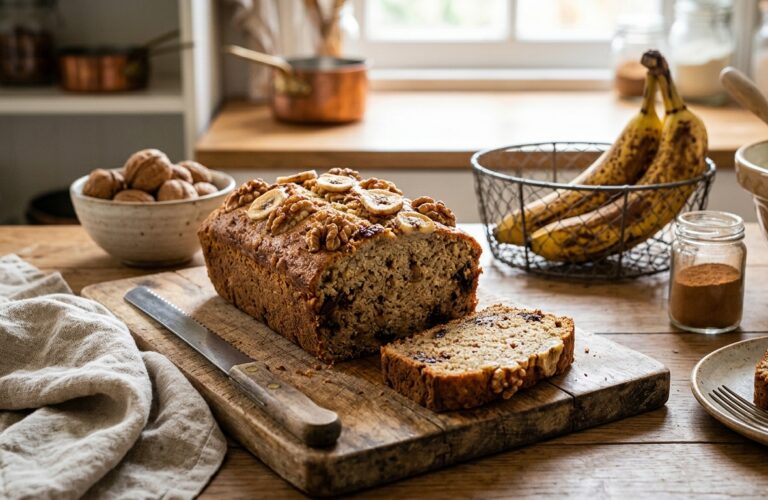
If you like, slice another banana lengthwise and carefully place a few pieces on top of the batter before baking.
This gives the finished loaf a homemade appearance and adds a little extra banana flavor.
Do not fill the pan all the way to the top. The batter needs room to rise while baking.
Bake the Banana Bread
Place the loaf pan in the center of the preheated oven.
Bake for approximately 50–60 minutes.
The exact baking time depends on your oven and the moisture level of the bananas.
Begin checking around the 50-minute mark.
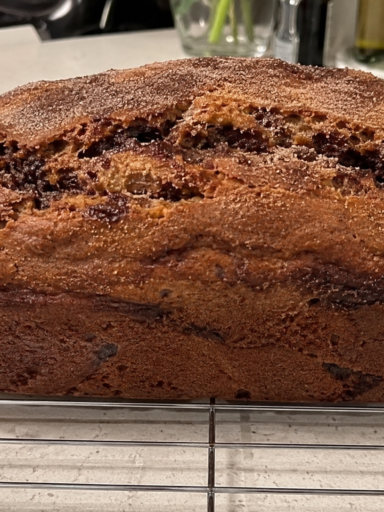
The top should be golden brown, and a toothpick inserted into the center should come out clean or with a few moist crumbs attached.
If the top is browning too quickly while the center still needs more time, loosely cover the loaf with foil for the remaining baking time.
Once fully baked, remove the loaf from the oven.
Let it cool in the pan for about 10–15 minutes before carefully transferring it to a wire rack.
Allow it to cool further before slicing.
How to Serve It
This banana bread is delicious on its own, especially while slightly warm.
For breakfast, serve a slice with Greek yogurt or fresh fruit.
For an afternoon snack, enjoy it with coffee or tea.
If you want something more indulgent, spread a little butter or gluten-free nut butter over a warm slice.
You can also lightly warm individual slices in the microwave for a few seconds before serving.
Storage
Allow the banana bread to cool completely before storing.
Keep it in an airtight container at room temperature for up to 2 days.
For longer storage, refrigerate it for up to 5 days.
You can also freeze individual slices. Wrap each slice well and place the wrapped pieces in a freezer-safe container or bag.
When you want a slice, thaw it in the refrigerator or at room temperature and warm it gently before serving.
Freezing individual portions makes it easy to enjoy homemade banana bread without having to bake a new loaf every time.
Tips for the Best Gluten-Free Banana Bread
Use very ripe bananas:
They provide better sweetness, moisture, and banana flavor.
Measure gluten-free flour carefully:
Too much flour can make the loaf dry. Spoon the flour into your measuring cup and level it rather than packing it down.
Do not overmix:
Mix just until the ingredients are combined.
Let it cool:
Gluten-free baked goods can be delicate when hot. Allowing the loaf to cool makes it easier to slice without falling apart.
Check every ingredient:
If preparing this for someone with celiac disease, check labels on flour blends, baking powder, baking soda, chocolate chips, nuts, and other packaged ingredients as needed.
Prevent cross-contact:
Use clean utensils, bowls, pans, and preparation surfaces that have not been contaminated with wheat-containing foods.
Easy Variations
This recipe is flexible enough to change according to your taste.
For a cinnamon-walnut banana bread, fold in chopped walnuts and an extra pinch of cinnamon.
For chocolate banana bread, add gluten-free chocolate chips.
For a nutty version, add chopped pecans.
For a simple breakfast loaf, keep the batter plain and serve it with fresh berries.
You can also add a little ground nutmeg or a small amount of shredded coconut for a different flavor.
Frequently Asked Questions
Can I use frozen bananas?
Yes. Thaw them completely first. If they release a lot of liquid, drain some of the excess before adding them to the batter.
Can I make this dairy-free?
Yes. Replace the butter with a suitable dairy-free baking alternative or melted coconut oil.
Can I use almond flour instead?
Almond flour cannot always be substituted one-for-one for a gluten-free all-purpose flour blend because it behaves differently during baking. For the most reliable texture, use a gluten-free flour blend designed for cakes and quick breads.
Why did my banana bread turn out dense?
Overmixing, too much flour, very little leavening, or underbaking can all contribute to a dense loaf. Measure carefully and mix the batter only until combined.
How do I know when it is done?
Insert a toothpick into the center of the loaf. It should come out clean or with a few moist crumbs, but not with wet batter.
Final Thoughts
This Soft Gluten-Free Banana Bread is a simple homemade recipe that makes excellent use of ripe bananas.
It is tender, comforting, easy to customize, and convenient enough for both breakfast and snacking. The recipe does not require complicated techniques, and the batter can be prepared in just a few simple steps.
If you are making it for someone with celiac disease, remember that choosing certified gluten-free ingredients and preventing cross-contact are just as important as the recipe itself.
Once you make a loaf, you may find yourself saving those extra-ripe bananas specifically for banana bread. A warm slice straight from the oven is hard to beat, especially when the kitchen is filled with that classic banana-and-cinnamon aroma.